Search "AI SDR" and you'll get about forty tools all claiming to "book 10x more meetings." Some cost $39 a month. Some cost $3,000. And honestly, most of the content ranking for this search is written by the tools themselves, so it's not exactly a neutral space.
We're one of those tools (Syndie), so read this with that in mind. But we'd rather tell you when you shouldn't buy us than pretend every problem needs a $2,000-a-month solution.
Here's the actual state of AI SDR tools in 2026, the three price tiers that exist, and how to figure out which one — if any — fits.
What is an AI SDR, actually?
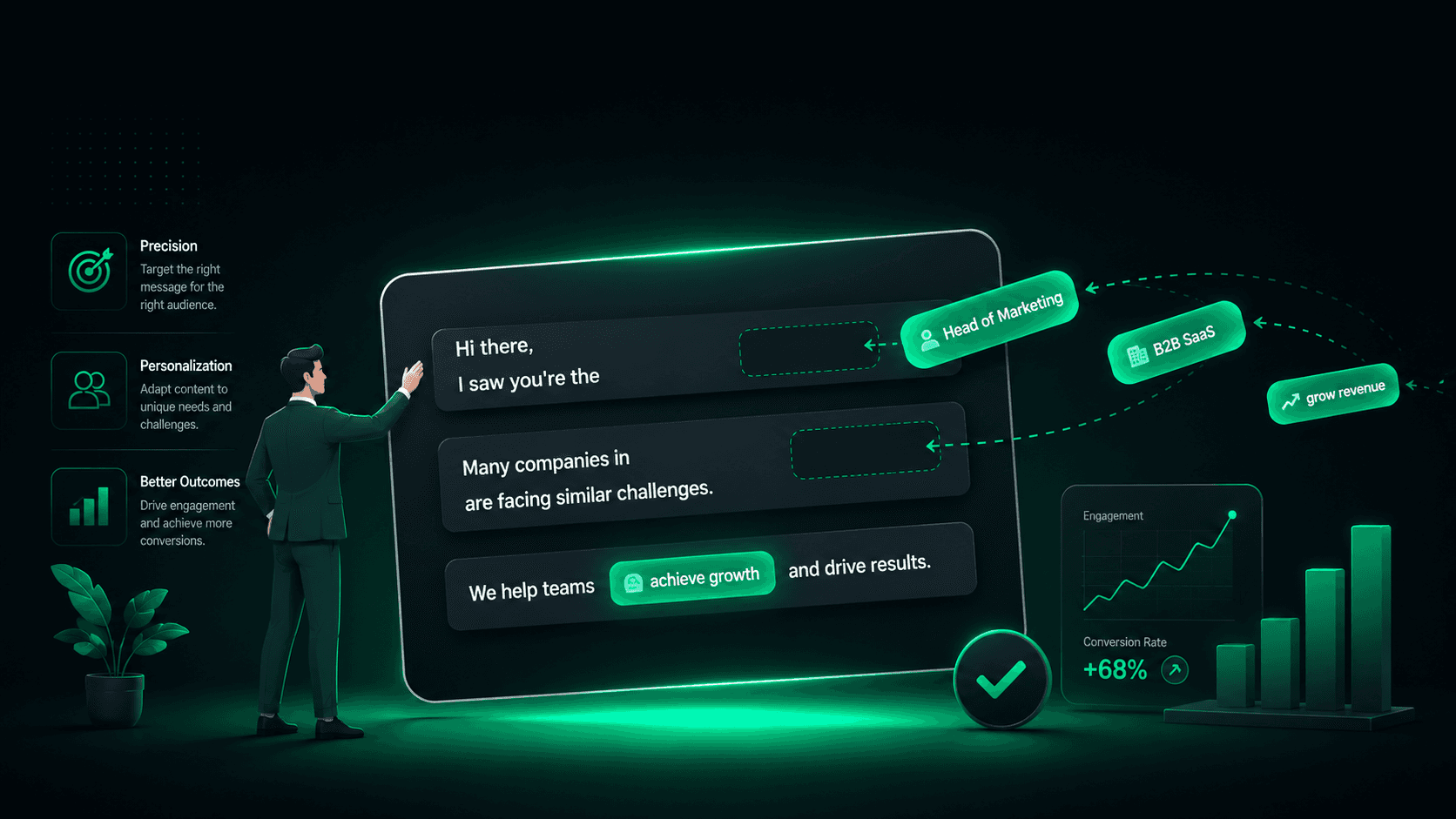
Strip away the marketing and an AI SDR does three things: it finds the right people, it writes personalized messages to them, and it follows up until someone replies or clearly says no. A human still reads the replies and closes the deal.
That's it. If a tool is selling you something more complex than that, ask what the extra pieces actually do.
The industry data backs that the basics work when done well: teams using AI-assisted outreach report meeting-booking rates up 30-40%, and the average payback on a decent AI SDR is 3-5 months. The problem isn't the category. It's that "AI SDR" has become a label slapped on everything from a $39 mailer to a $3,000 autonomous agent, and they're not the same product.
The three tiers (and who each is for)
Here are the three real price bands, because the middle one is where most small teams actually belong.
Tier 1 — The senders ($15-59/month).
Tools in this band — the classic LinkedIn automation and mailer tools — automate the sending. You write the messages (or paste in templates), and they handle volume, follow-ups, and basic sequences.
Pick this if you already have strong copy, you want cheap volume, and you're fine writing everything yourself. Skip it if you don't have time to write 200 personalized messages a month, or your messages sound generic. At this tier, the tool is just a fast mailman for your words.
Tier 2 — The AI-assisted layer ($69-99/month).
This is where the tool writes. It researches the prospect, drafts a personalized first message, runs the sequence across LinkedIn and email, and hands you the replies in one place. You review and send. You stay in the loop; the tool removes the typing.
Pick this if you're a founder or a small team, you want personalization without a copywriter, and you're not ready to hand the whole job to a robot. This is the tier where "AI writes, human decides" actually lives. Skip it if you have a big sales org that needs account-level orchestration and reporting beyond a single outbound motion.
Tier 3 — The autonomous "AI employee" ($1,500-3,000+/month).
These are the fully autonomous agents — they prospect, write, send, and run the whole loop with minimal human involvement. The "digital BDR" products.
Pick this if you have a real outbound machine already, a big list, and you want to scale volume across many accounts without adding headcount. Skip it if you're a small team or still figuring out your ICP. Autonomous doesn't mean "you can't steer it" — it means the default is to steer for you, and at your stage you usually want your fingerprints on every message.
The 5 features that actually matter
Out of the feature lists these tools publish, five do most of the work:
- Personalization depth. Does it reference real, specific details about the prospect — a recent post, a hire, a product change? Or just name and company? The research is blunt: outreach with three or more real data points converts about twice as well as lightly personalized messages. This is the single biggest quality separator.
- Multi-channel in one place. Email plus LinkedIn from one inbox, with the sequence spanning both. Multi-channel sequences convert at roughly 2.3x single-channel, and the whole point is that you're not juggling four tools.
- Reply handling. When someone replies, does the sequence pause and a human take over? Or does the bot keep blasting follow-ups at a live conversation? The second one is how you lose a deal — and a customer.
- Trigger-based targeting. Can you time outreach to a signal — a job change, a funding round, a hiring post? Timing is the cheapest multiplier in outbound, and tools that only do "always-on" lists leave it on the table.
- Account safety. Capped daily sends, human-like pacing, and honest language about risk. Be suspicious of any tool that promises "100% safe." Nobody can. You want managed risk, not a guarantee.
The 5 features that are mostly marketing
Just as useful, the stuff that sounds impressive and does little:
- "10 languages" (nice until it isn't the problem)
- "AI that learns your brand voice" (often just a tone slider in a trench coat)
- "Predictive lead scoring" (a black box you can't explain to a prospect)
- "Infinite integrations" (you'll use three)
- "Autonomous everything" (a feature until it sends something you'd rather not have)
The payback math (do it before you buy)
Don't buy on features. Buy on this one number: cost per qualified meeting.
If a tool costs $69/month and gets you 15 extra meetings a month, the cost per meeting is under $5. If it costs $2,000/month and gets you 25, it's $80. The first number is a rounding error against a deal. The second needs a real justification.
That's why the average payback lands at 3-5 months for teams that already have an outbound motion — the tool has to pay for itself in meetings, not in a dashboard that looks good.
So which one do you pick?
- A solo founder or a two-person team with no outbound system: Tier 2. You need the writing help more than you need autonomy.
- A small team with good copy that just needs volume and follow-up: Tier 1 is fine, and you'll save money.
- A scaled sales org running outbound across many accounts: Tier 3 makes sense — you have the volume to justify it.
- Nobody should be on Tier 3 to "try it out." Start lower. You can always scale up.
The honest part about buying from us
We're Syndie, and we sit in Tier 2. If you're a big org that needs full autonomy, there are tools built specifically for that, and you should look at them. We'd rather you buy the right tier from the right vendor than the wrong tier from us.
That said, if you're a founder or a small team and you want the AI to write, the human to decide, and the whole thing to cost less than one SDR hour a week — that's exactly the gap we built for. Your first campaign takes about two minutes to set up, and you can run it on a 14-day trial before you spend anything.
If that's not you, save this post for when it is.